When the Beach Comes Back: Timing a Fort Perch Rock Visit by the Tide
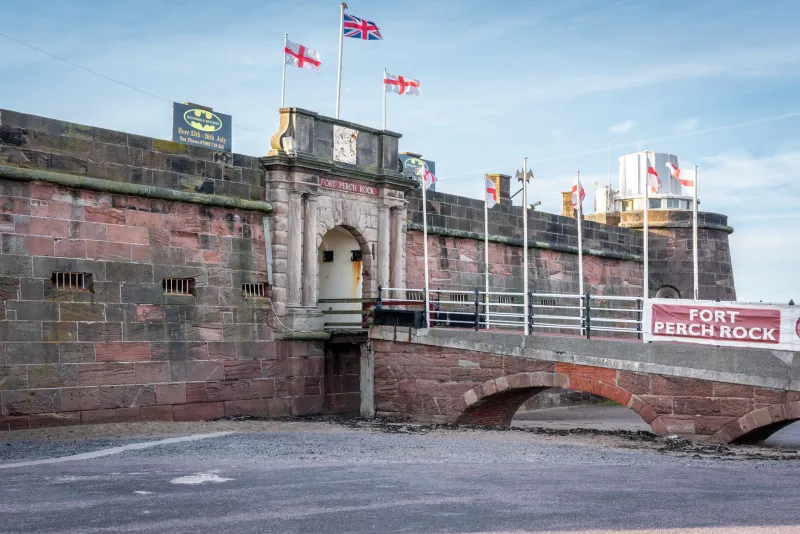
Fort Perch Rock has a clock that nobody can wind back. The tide sets the mood, the walking routes and, quite often, the photographs. Turn up at the wrong moment and you might find a strip of silver water where you expected sand; arrive at the right one and the fort, the lighthouse and the beach all seem to click into place.
This is not a timetable for the fort itself — opening hours and event days are a separate matter, so always check ahead. It is a guide to reading the water, choosing a sensible window and building a half-day around what the Mersey is actually doing.
Start With the Right Tide Table
For Fort Perch Rock, the useful tide reference is the Liverpool area — Gladstone Dock is the usual standard — though New Brighton-specific tables are handy if you can find them. What matters is not just the time of high and low water, but the height. A low tide of 1.2 metres is a very different prospect from a low tide of 3 metres, and a spring tide can transform the beach far more dramatically than a neap.
Check two things before you leave: the tide times and heights for your date, and the weather forecast. Wind direction can push water around the estuary and make a bright-looking forecast feel raw on the promenade. A quick look at the Met Office and a reliable tide table is worth more than a optimistic glance out of the window.
What the Water Does to the Day Out
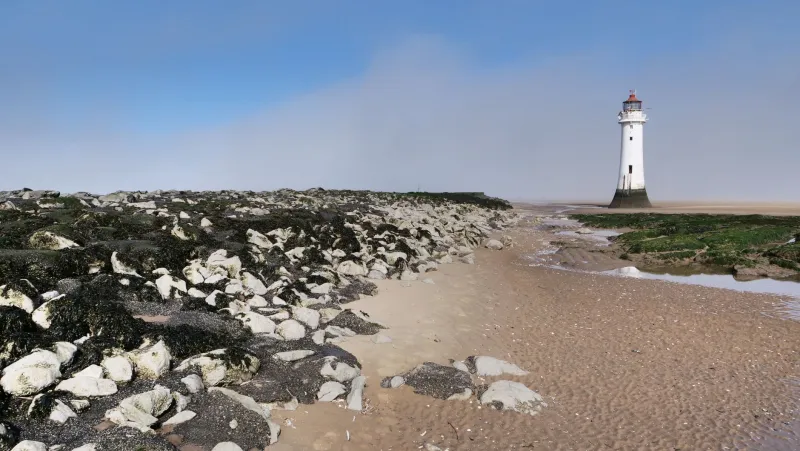
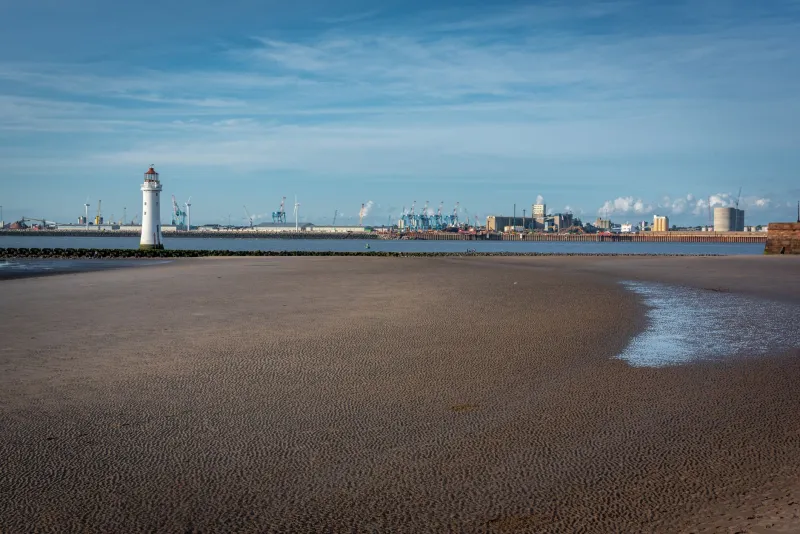
At low water, the shore opens up. Sand, ripples and scattered stones appear, and the fort looks properly planted on its rock rather than floating in the channel. This is the window for beachcombing, for letting children run about with a clear boundary, and for photographs that show the scale of the place. It is also the window that demands the most care: the Mersey has mud, channels and a tide that can return faster than you expect.
At mid tide, you get the best of the in-between. There is usually enough beach to wander without committing to a full low-water expedition, and enough water around the rock to make the fort look like a fort. This is a good all-round window for a first visit.
At high water, the beach disappears and the day changes character. The fort sits in its element, the lighthouse stands clear against the sky, and the promenade becomes the place to be. This is not the time to go hunting for sand, but it is a fine time for a bracing walk, a coffee and a bit of sea-watching from safely behind the railings.
Three Windows, Three Kinds of Day
The low-water window
Aim to arrive about an hour or two before low water and leave well before the tide turns properly. This gives you time on the beach without pushing your luck. It suits families, beachcombers and anyone who wants to see the fort from the shore rather than the promenade. Keep an eye on the water's edge, not just the clock, and never walk out beyond other people or past a warning sign.
The mid-tide window
This is the easy option. The promenade, the fort exterior, the lighthouse and the nearby cafés all work well, and you are not relying on the beach being open. It is a good choice for a mixed group where some people want a walk and others want to sit with a flask. If you are unsure which window to pick, pick this one.
The high-water window
High tide is for atmosphere rather than exploration. The water fills the channels, the light changes, and the fort and lighthouse become a proper pair of landmarks. Photographers often prefer the hour or so either side of high water for reflections and clean lines, but it is also the least forgiving time to be messing about near the edge. Stay on the promenade, use the railings, and enjoy the show from a sensible distance.
Half-Day Plans That Actually Work
Low-tide morning: Coffee in New Brighton, a slow wander down to the shore, an hour or so on the beach while the water is low, then back to the promenade for lunch. Keep the fort as a backdrop rather than a full-on visit unless you have checked opening times.
High-tide afternoon: Start with the promenade and the lighthouse views, walk towards the fort for exterior photographs, then retreat to a café when the wind picks up. Finish with a sunset if the sky is playing ball. No beach required.
Photography stop: Use low water for texture, lines and the rock itself; use high water for reflections and a sense of the fort surrounded by sea. Do not try to do both in one mad dash. Tide windows are short, and the best shots usually come from staying in one place and watching the light.
Safety Notes Worth Repeating
The Mersey is not a swimming pool with a timetable. Incoming tides can cut off routes, mud can be deeper than it looks, and channels can fill quickly. Children and dogs need close attention near the water. If you are unsure, stay on the promenade. If a sign says no access, believe it. And if the wind is strong enough to make the promenade feel like hard work, the beach is probably not the place to be.
Before You Set Off
Check the tide table, check the weather, check the fort's opening details, and take footwear that can cope with wet sand and uneven ground. Have a backup plan that does not depend on the beach. Fort Perch Rock is rewarding in almost any conditions, but it is at its best when you let the water clock set the pace.