Binoculars by the Breakwater: Wildlife-Watching Around Fort Perch Rock
Fort Perch Rock is a history lesson with a front-row seat. From the ramparts and the promenade around it, you are looking out over the mouth of the Mersey, where river water, sand and tide meet. That makes it a surprisingly good place to watch birds, even if you have never owned a pair of binoculars in your life.
You do not need to become a twitcher to enjoy this. You just need to slow down, check the tide and know roughly what you are looking at. The New Brighton shoreline is part of a working estuary, and estuaries are engines for wildlife. Mud, shallow water and shelter add up to food, and food adds up to birds.
Why this stretch of coast is worth watching
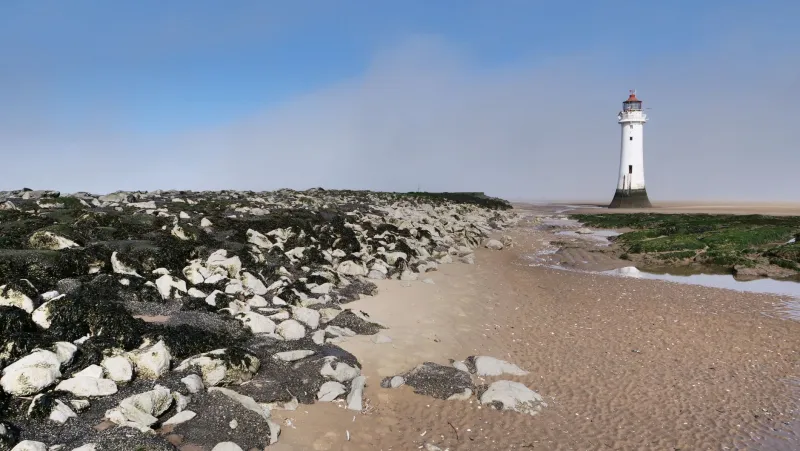
The Mersey estuary is one of those places that looks ordinary until you learn to read it. At low tide, the water pulls back and exposes mudflats and sand. That is the table setting for wading birds. At high tide, the water pushes them off the mud and into roosts, sometimes close to the promenade. The Marine Lake at New Brighton adds another habitat, with calmer water and its own little cast of gulls, ducks and the occasional argument.
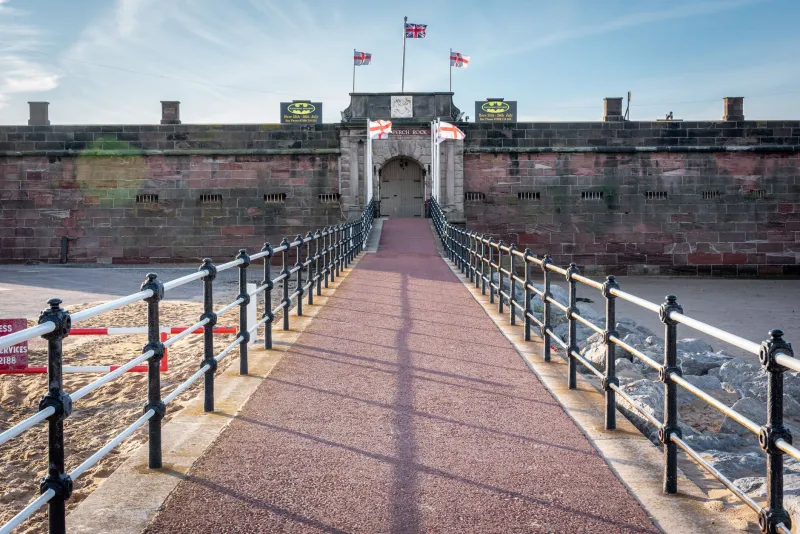
Fort Perch Rock sits right in the middle of this. It is not a nature reserve with a visitor centre and a nice sign. It is a coastal fort in a busy seaside town, which is exactly why it works. You can combine a look round the fort with a walk along the front and a bit of birdwatching without making a whole day of it.
Four good places to stand
The fort itself is the obvious starting point. If it is open, the upper levels give you a wider view of the river and the shoreline. If it is closed, the promenade around it still works. Respect any barriers and opening times. You are a guest in a historic site, not a stakeout.
The New Brighton promenade is the easy option. It gives you a long view along the beach and out towards the river. The Marine Lake is good for closer, calmer watching, especially if the wind is doing its best to remove your hat. And the beach near Perch Rock at low tide can be excellent for waders, as long as you keep your distance and keep an eye on the water.
The tide is your timetable
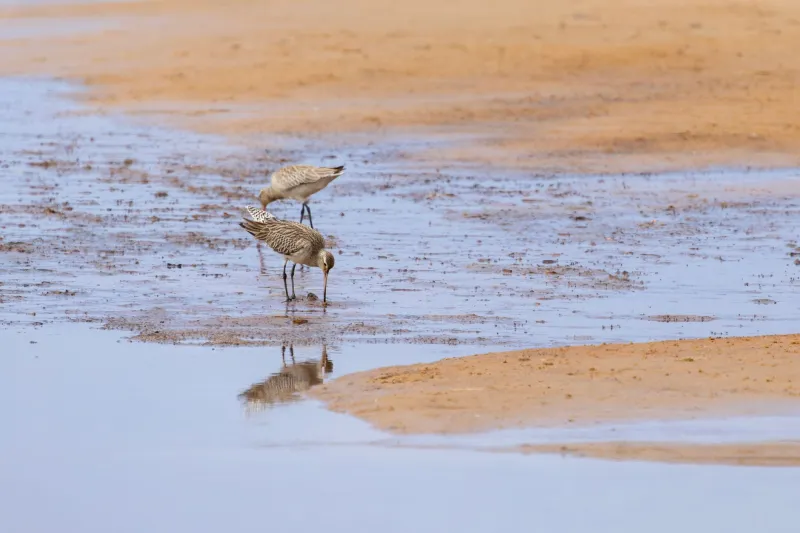
If you remember one thing, remember this: the tide changes the show. At low water, the mudflats are exposed and the waders spread out to feed. You might see oystercatchers with their orange bills, redshank picking about, dunlin in restless flocks or curlew probing the mud. At high water, those same birds are pushed off the mud and into roosts. That can mean better views, but it also means you need to be careful not to disturb them.
Check a tide table before you go. A falling tide gives you more beach and more feeding birds. A rising tide can bring birds closer, but it can also cut off your route back. Do not walk out onto exposed sand without knowing when the water returns. The Mersey is not a gentle lake, and the tide does not wait for you to finish your paragraph.
What you might see through the year
Winter is the strongest season for waders and wildfowl. Oystercatchers, redshank, dunlin, curlew and shelduck are all part of the estuary story, along with cormorants, grey herons and the usual gulls. Some years bring more than others, and the weather can shift the numbers, but the basics are there.
Spring and autumn are the moving seasons. Birds are passing through, and the mix changes from week to week. Summer is quieter for waders but good for gulls, terns and the general seaside business of birds making a living. Whatever the season, the fort gives you a fixed point to watch from while the water does its thing.
Watching without disturbing
Ethical watching is simple. Keep your distance. Use binoculars rather than walking closer. Stay on paths and promenade where you can. Keep dogs under control, especially near roosts and feeding flocks. Do not feed the gulls, however funny they look when they are being outrageous. If the birds lift and fly away, you have got too close, and you should back off.
The best wildlife encounters are the ones where the animal carries on as if you are not there. That is the aim. You are not collecting a list. You are just borrowing a bit of the estuary for an hour.
A simple kit list
You do not need much. A pair of binoculars is the big one, and 8x42 is a sensible all-round size. Wear layers, because the wind off the Mersey can be sharp even when the town feels mild. Bring a tide table or check one on your phone. A notebook is handy if you want to remember what you saw. And a flask is never a bad idea.
Make a day of it
Fort Perch Rock is the anchor, but the wildlife is the bonus. Do the history, walk the front, check the Marine Lake and give the tide a bit of your time. You might come for the fort and leave having watched a curlew work the mud like it is being paid by the worm. That is a good day out.