Horizon Lines: Reading the Mersey from Fort Perch Rock's Ramparts
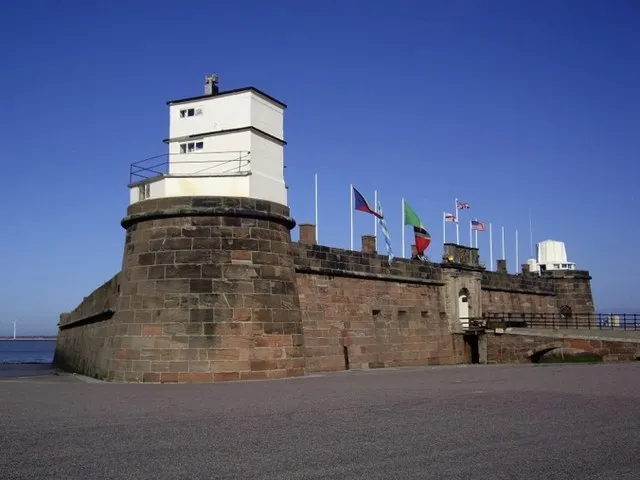
Photo: Tom Pennington, CC BY-SA 2.0, via Wikimedia Commons
Fort Perch Rock is usually introduced as a fort, a museum or a live venue. All true. But climb to the ramparts and it becomes something else: a viewing platform with a story attached. The sea, the river and the city are all laid out in front of you, and each landmark explains a little more about why a fort was planted on this particular rock in the first place.
You do not need specialist kit to enjoy it. A pair of binoculars helps, and a phone compass is useful for the first five minutes. After that, the view starts to organise itself. Here is how to read it without turning a pleasant morning into a geography exam.
Start with the compass, not the camera
From the top of the fort, the first useful move is to work out which way you are facing. The fort sits at the north-east corner of the Wirral peninsula, guarding the approach to the Mersey. Look east and south-east and you are looking across the river towards Liverpool. Look north and north-east and you are looking towards the open approach from Liverpool Bay, with the shipping lane and the offshore wind farm in view. Turn west and south-west and the Wirral coast, the promenade and the distant Welsh hills come into play.
That simple sweep explains the fort's position better than any plaque. It was not built for a quiet seaside view. It was built to watch a busy, strategic channel, where ships came in and out of one of Britain's most important ports. Once you know which way you are looking, the rest of the panorama begins to make sense.
Liverpool: the skyline across the water
The most obvious landmark is Liverpool itself. From New Brighton, the city reads as a low ridge of buildings with a few unmistakable shapes on top. The Royal Liver Building, the Cunard Building and the Port of Liverpool Building sit together in the historic waterfront group often called the Three Graces. Further along, the cathedrals and the arena add their own profiles. On a clear day, the cranes and docks to the north of the city remind you that this is still a working port, not just a postcard.
It is worth pausing on that. The fort and the city grew up together because of the river. Liverpool provided the trade; the Wirral shore provided the seaward approach that needed watching. The view from the ramparts makes that relationship visible in a way that a museum display cannot. You are looking at the reason the fort exists.
The shipping lane: a moving part of the view
Unlike most landmarks, the shipping lane changes by the minute. From the ramparts you can often pick out ferries, tugs, pilot boats and larger vessels making their way in or out of the Mersey. The exact traffic depends on the day and the tide, so treat any sighting as a bonus rather than a guarantee. Binoculars are genuinely useful here, especially for reading the shapes of distant ships against the water.
The tide matters too. At high water the river looks full and busy; at low water, sandbanks and mudflats appear, and the channel narrows into a more clearly defined route. If you are planning a photography visit, check a tide table before you travel. A mid-tide often gives you both water and texture, with boats sitting at useful angles rather than floating flatly on a full river.
The Wirral side: lighthouse, promenade and coast
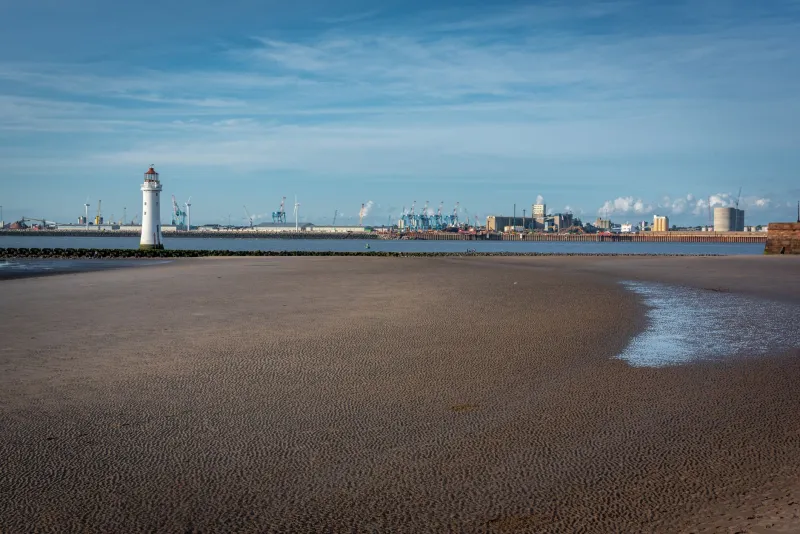
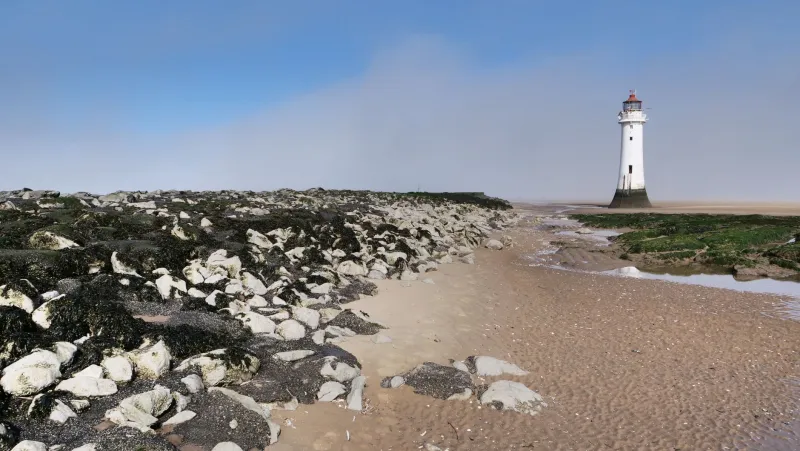
Turning towards the Wirral shore, the view becomes more intimate. New Brighton Lighthouse stands close by, its white tower a useful anchor point when you are trying to explain the scene to someone else. The promenade curves away, with Marine Lake and the busy edges of New Brighton visible in the middle distance. Further west, the coast stretches towards Hilbre Island and the Dee estuary, though haze can soften or hide the furthest points.
This side of the view is a reminder that Fort Perch Rock is not an isolated monument. It sits within a working seaside town, with a promenade, a beach, a lighthouse and a steady flow of walkers, cyclists and dogs. The ramparts give you the overview; the promenade gives you the close-up. A good day out uses both.
Distant hills and the limits of seeing
On a really clear day, the Welsh hills can be made out to the west and south-west, with the Clwydian Range and sometimes higher peaks beyond. Do not promise yourself Snowdonia on every visit. Visibility changes quickly on this coast, and what is sharp at noon can be gone by tea-time. The same is true of the Lancashire hills to the north-east, which appear and disappear with the weather.
That uncertainty is part of the pleasure. The view from Fort Perch Rock is not a fixed exhibition. It is a live panorama, affected by tide, cloud, season and the time of day. If you visit in 2026 and see only the Liverpool skyline through a soft haze, you have still seen the essential geography. If the hills appear, that is a bonus.
When the light is best
For photographs of the Liverpool skyline, late afternoon and early evening are often the most rewarding. The sun is behind you or to your side, and the city buildings pick up warmer light. Morning can be dramatic in a different way, with the skyline silhouetted against a bright sky, but it is less forgiving for detail. Winter brings low sun and long shadows, which can be excellent for the fort's own stonework, though you will need to wrap up.
Whatever the season, give yourself more than five minutes. A quick look from the ramparts is fine, but the view rewards patience. Watch a ship move. Wait for the light to change. Find the lighthouse, then the cathedral, then the cranes. The panorama is not a checklist to tick off; it is a way of understanding the coast you are standing on.
Turning the view into a day out
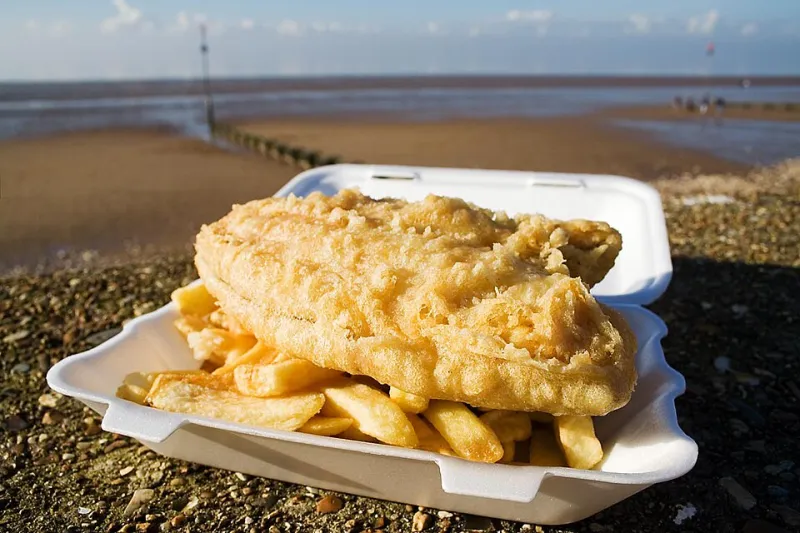
A visit to the ramparts works well as the centre of a slow loop. Start with the fort and the view, then walk along the promenade towards the lighthouse. Stop for chips or a coffee. If the tide is out, look at the beach; if it is in, watch the water. Keep an eye on the weather and the tide table, and leave room for a second look from a different angle later in the day.
For a 2026 day out, the appeal is simple: this is a free view with a great deal of history behind it. You do not need to know the name of every ship or every hill. You just need to stand on the ramparts, work out which way you are facing, and let the Mersey explain itself.