Benches, Ramps and a Bit of Planning: A Comfortable Visit to Fort Perch Rock
Fort Perch Rock is one of those places that looks simple from a distance: a squat stone fort, a wide sky, a strip of sea. Up close, though, it asks a few more questions of a visitor. There are gradients, uneven surfaces and changes of level. The waterfront around it is easier going, but it is still a working coastal edge with wind, tide and plenty of people. This guide is for anyone who wants an honest picture before setting out in 2026 — especially if you use a mobility aid, are pushing a pram, manage sensory needs or tire more quickly than you used to.
Start with the truth about the fort
Fort Perch Rock is a historic defence site, not a modern visitor centre. That is part of its charm, but it also means you should not assume barrier-free access from the car park to the gun decks. The approach and interior involve steps, narrow spaces and surfaces that have had a long time to become uneven. Some areas may be manageable with help; others may not be. Rather than guessing, contact the venue before you travel and ask specifically about your situation: wheelchair or rollator access, pram width, seating inside, lighting levels and whether there is a shorter route to the parts you most want to see.
Opening arrangements in 2026 can vary with events, volunteer availability and the weather. A quick check of the fort’s current listings before leaving home is worth more than any general guide, including this one. If the interior is closed or sounds unsuitable on the day, the exterior and the surrounding promenade still make a good trip.
Getting there without turning it into a mission
New Brighton is well served by public transport, which helps if you would rather not hunt for a parking space. Merseyrail runs to New Brighton station, a short distance from the waterfront. Step-free access and lift availability can change, so check the current station information before you set off, particularly if you are travelling alone with a wheelchair or heavy pram. Local buses also stop near the front, and taxis can drop off close to Marine Point, which is a more sheltered starting point than the exposed fort approach on a windy day.
If you are driving, Blue Badge parking and drop-off points are the things to check directly with the local car park operators. Do not rely on memory or old forum posts. New Brighton’s front has been through plenty of changes, and 2026 arrangements are best confirmed with the people running the car parks.
The waterfront route that usually works best
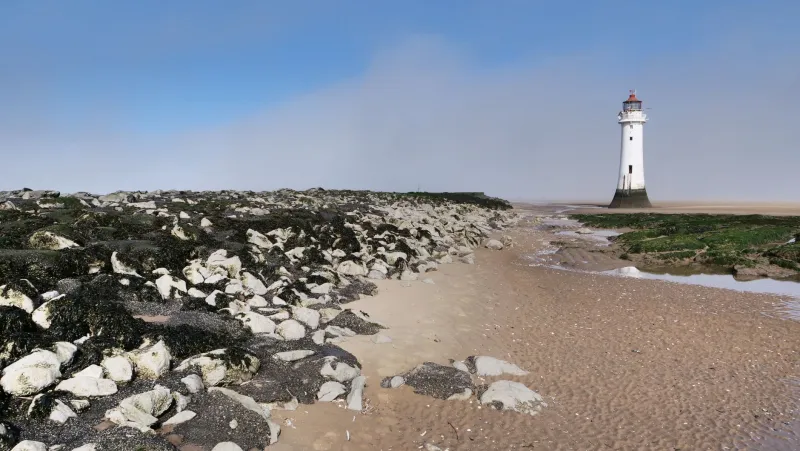
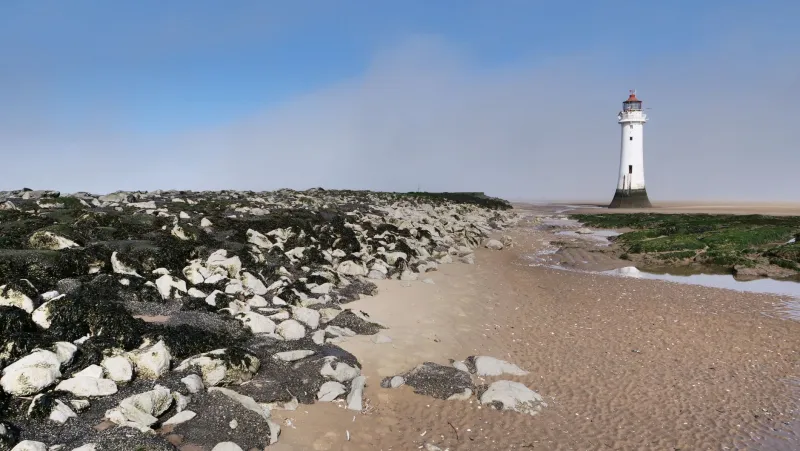
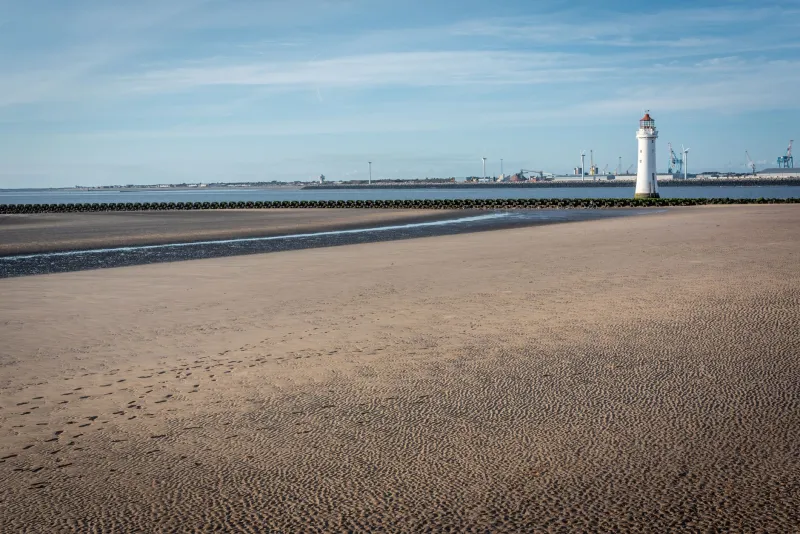
The promenade around New Brighton is the most reliable part of the day for many visitors. It is broadly level in places, with long sea views, benches and plenty of space to stop without feeling in the way. A sensible route is to start at Marine Point, use the cafés and toilets there if you need them, then follow the front towards Fort Perch Rock at an easy pace. You can enjoy the fort from the outside, take in the lighthouse view and turn back whenever you like.
Do not treat the promenade as perfectly flat or perfectly smooth. There are cambers, kerbs, patches of grit and busy moments near the fairground and arcades. The wind can be stronger than it looks from inland, and sea spray can make surfaces slippery. A walking stick with a good ferrule, a wheelchair with decent tyres and shoes with grip all earn their keep here.
Places to pause, and what to check about toilets
Rest stops matter. Benches are scattered along the front, but they are not evenly spaced, and on a sunny weekend they get taken quickly. Marine Point has cafés and indoor seating where you can warm up or cool down. Public toilet provision can be less predictable than people expect at the coast, so check current opening times and accessibility before you rely on any single facility. If you need an accessible toilet with specific equipment, plan around a known venue rather than hoping for the best near the fort.
The fort itself may have toilet access only when open and staffed, and historic buildings rarely offer the space or layout of a modern facility. Ask ahead if this is essential to your visit.
Quieter times and sensory considerations
New Brighton is a lively front. Arcade noise, fairground music, seagulls, wind and crowds can all pile up. If noise or bustle is difficult, weekday mornings outside school holidays are usually calmer than weekends and event days. Check the local events calendar for 2026 as well: a quiet Tuesday can turn into a busy Saturday if something is happening on the front.
Bring headphones, a scarf or hood for wind, and a planned escape route to a café or the station if you need one. The fort’s interior can be dim and echoey, so ask about lighting and crowding before you commit to going in. For some visitors, a short exterior look and a bench with a view is the better day out — and that is a perfectly good way to visit.
A realistic half-day plan
Start at Marine Point, use the toilets and get a drink. Walk or roll along the promenade towards Fort Perch Rock, stopping at the first bench that suits. Look at the exterior, read the interpretation if it is available, and decide there and then whether the interior is manageable. If it is not, carry on towards the lighthouse view or head back for cake. Check the tide before you go; the water changes the look of the place and can affect how much beach is available. Finish with a sit-down somewhere warm.
Before you set off in 2026
Check the fort’s opening arrangements, ask about access for your specific needs, confirm toilet provision, look at station lift information, check the tide and weather, and have a backup plan that does not depend on getting inside the fort. Fort Perch Rock is not a fully barrier-free site, and it does not pretend to be. With a bit of planning, though, the sea views, the promenade and the sense of history are still within reach.