Shells, Shadows and Stories: Putting Fort Perch Rock's Tallest Tales on Trial
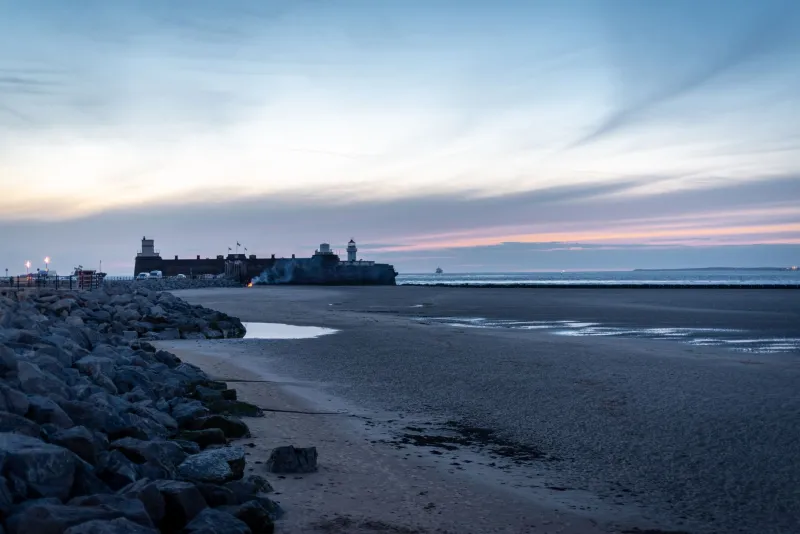
Ask five people on New Brighton promenade what Fort Perch Rock was really for and you will probably get six answers. Half of them will involve a tunnel. One will involve a German bomber. Someone will swear the guns never went off in anger, and someone else will describe the smuggler's cellar under the magazine. It is a building that invites storytelling, and those stories have had nearly two centuries to bed in.
This is not a debunking exercise. Legend is part of the fabric here, and the fort has always had a bit of the showman about it. But if you are the sort of day-tripper who likes to arrive with questions rather than certainties, it helps to know which end of the telescope you are looking through. So here is a walk through the fort's most repeated claims, with the evidence, the gaps, and the clues you can check with your own eyes.
Claim one: it never fired a shot in anger
This is the fort's most quoted line, and it is broadly the safest of the big claims, though for reasons people rarely spell out. Fort Perch Rock was built between 1826 and 1829 to close the seaward approach to the Mersey and the port of Liverpool. Its purpose was deterrence: a low, heavily gunned battery sitting on a rock in the fairway, visible from miles out. A fort that does its job is a fort nobody tests.
The guns did fire, of course. Salutes, practice and gunnery drills all appear in the record, and the local papers of the Victorian period were fond of a bit of artillery noise on a public occasion. What you will not find easily is a documented account of the fort firing at an enemy vessel. That absence is not quite proof of silence, and wartime records from the Merseyside defences are patchy in places. Local tradition includes accounts of the fort's guns opening up during air raids in the 1940s; other accounts credit the noise to neighbouring batteries. Treat the tidy version, 'never fired in anger', as shorthand for 'never had a target worth firing at' rather than a literal transcript.
Claim two: the tunnels
Every coastal fort in Britain has a tunnel story, and Fort Perch Rock has several: a passage to the long-gone New Brighton Tower, a link to a church on the hill, a smugglers' run under the rock itself.
Start with the geography. The fort sits on a tidal rock, not on solid dry land, and the water table does the rest. A tunnel from the rock to the shore would be a permanent pumping job, and there is no culvert, adit or masonry line visible at low water that would suggest one. Ordnance Survey mapping from the nineteenth and twentieth centuries shows no such feature, and the fort's own plan is well documented as a compact, self-contained work.
There are genuine subterranean spaces, which is part of why the story survives. Magazines, casemates and the dark passages that connect them are quite enough to convince a child on a school trip that the place goes on forever. When you visit, look at how the vaulting is built into the rock and how shallow some of those spaces actually are. The mystery shrinks, but only a little.
Claim three: smuggling
New Brighton and the Wirral shore have a real smuggling heritage, and the name of the fort's rock is a clue to older maritime use: the 'perch' was a marker beacon warning shipping off the rock long before the army arrived. It is a short step from there to barrels in the dark.
The awkward detail is timing. The fort was built in the late 1820s, by which point the coastguard service and a much more organised customs operation had taken most of the profit out of the trade. There is no archival paper trail tying the fort's garrison to contraband. It makes a wonderful story, and it is not impossible, but it is legend rather than record.
Claim four: Napoleon built it, or built it for Napoleon
Neither. Napoleon died in 1821; the fort was begun five years later. What is true is that the fear outlived the man. French invasion scares, the growth of Liverpool as a target worth defending, and a European order that felt permanently unstable all fed the decision to fortify the Rock. The fort is a product of anxiety, not of a single Corsican.
What the records actually say, and where to look
If you want to go deeper than a plaque, several doors open easily. The Historic England listing entry gives you the architectural description and statutory history in one go. The Merseyside Historic Environment Record holds monument and archaeological records for the site and its surroundings. Wirral Archives, at the Birkenhead Reference Library, is the place for local newspapers on microfilm, and the Victorian Liverpool press loved a fort-related paragraph. National archives at Kew hold ordnance and fortification papers, though you will want a research day rather than a rainy afternoon. And the fort's own displays, when it is open, are a good starting point for photographs and objects you can then try to date yourself.
Field notes for your visit
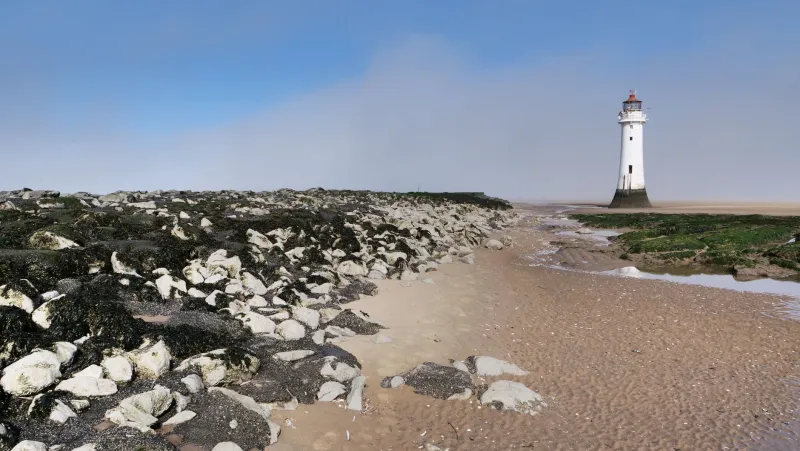
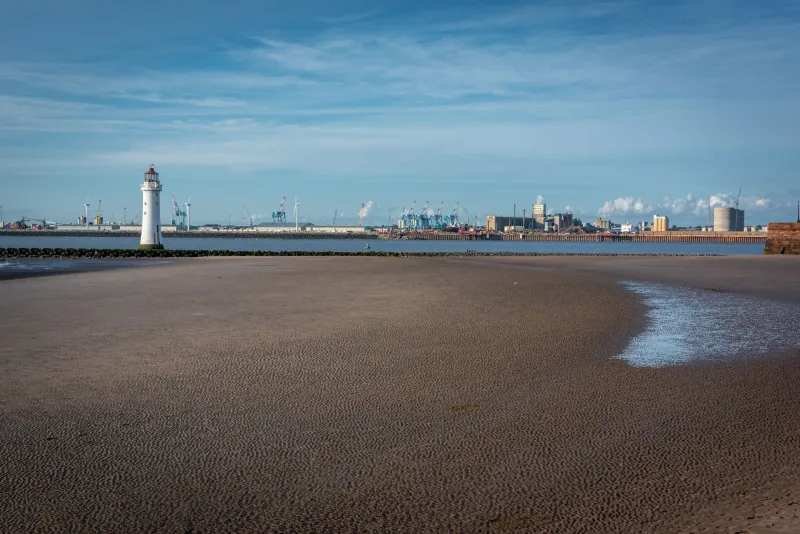
Come at low water and walk the rock. Look at the masonry courses, the way the battery hugs the ground, and the small lighthouse added at the seaward corner in 1830, which is a navigation aid rather than a defence. Note how little of the fort is above the height of a decent wave. Then stand on the promenade at high tide and watch the water swallow the approach. A building that vanishes twice a day is always going to attract stories.
Why the myths endure
My honest view is that the tales do a job. Fort Perch Rock is a strange, low, warlike shape in a seaside town that otherwise sells ice cream and sunsets. The myths explain the shape, fill the gaps that the documents leave, and make a family walk along the prom a bit more exciting. They also keep people talking about a building that was very nearly lost more than once.
So enjoy the tunnels. Repeat the story about the silent guns. But take the extra step and check one thing for yourself, whether that is a map, a listing entry or a line of masonry at low water. The fort has survived longer than most of the rumours about it, and it rewards the curious far more than the credulous.