What the Mersey Leaves Behind: A Beachcomber's Field Notes from Perch Rock
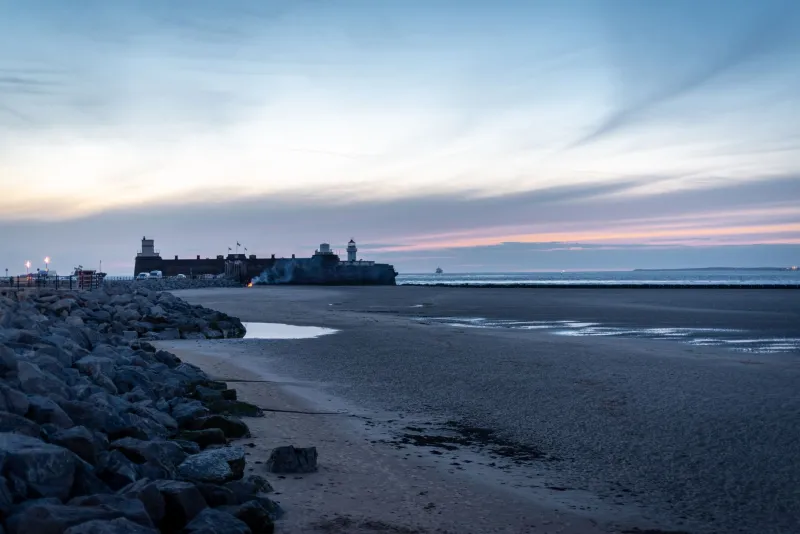
When the tide drops below Fort Perch Rock, the beach stops looking like a beach and starts looking like a scattered desk of evidence. Sea glass, brick, pottery, coal, shells, rusted metal, odd lumps of slag: none of it arrives with a label. The pleasure of beachcombing here is not just finding things. It is reading them.
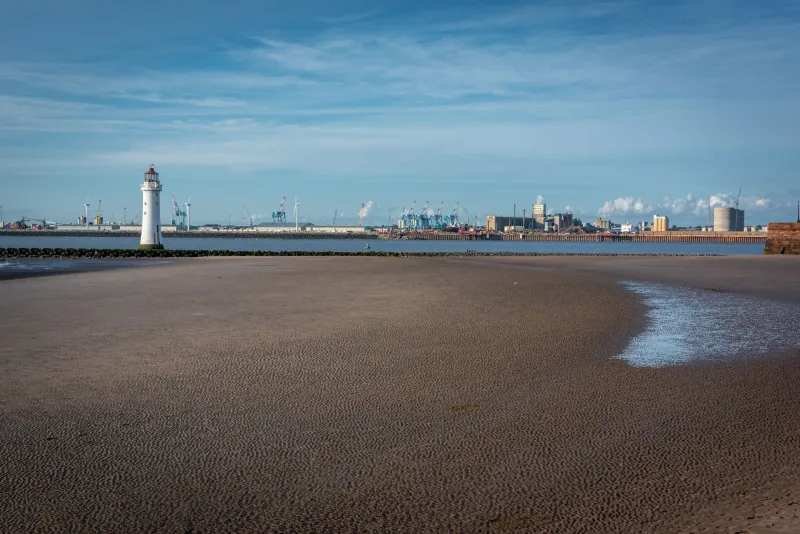
This stretch of the Wirral coast sits at the mouth of the Mersey, with the fort on one side of the story and the lighthouse on the other. Ships have passed through for centuries. Industry has come and gone. The river has carried, dropped and rearranged it all. A morning with your eyes down is a morning spent in the company of that history — provided you keep one eye on the tide.
The tide is the first page of the field guide
Before you read the beach, read the tide table. New Brighton and Liverpool tide times are easy to find, and low water is your window. Do not wander out simply because other people are out there. The Mersey is a working river with strong currents, and the sand below the fort can hide gullies, soft mud and unexpected channels.
Spring tides expose more, which is tempting for the beachcomber, but they also return faster. Aim to be back on the promenade well before the turn of the tide, and never let the sea get between you and your exit route. If the wind is up or the forecast is poor, save the search for another day. The beach is not going anywhere. You might.
Reading the strandline
The high-water line is where the river leaves its calling card. Look along the tangle of seaweed, twigs and plastic for the heavier things that have been rolled and dropped. Sea glass is common here in green, brown and white; blue is the one that makes people gasp. Pottery fragments turn up too, some plain, some with a printed pattern or a maker's mark that sets off a harmless bout of kitchen-table research.
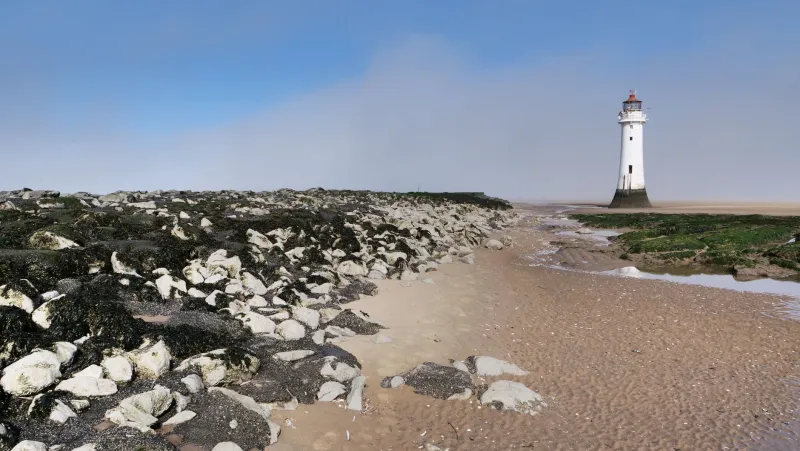
Lower down, the wet sand and the edge of the rocks tell a different story. Shells, whelk egg cases and mermaid's purses are natural finds. Bricks, coal and slag point to the working river and the industries that lined it. Old clay pipe stems are the kind of object that looks like a stick until you notice the bore hole. Rusted metal and broken glass are common enough to require gloves and a little care.
The mistake is to assume every object has a dramatic origin. A brick is not automatically from a famous shipwreck. A lump of coal is not automatically a message from a Victorian steamer. It might be ballast, cargo spill, river rubbish or something dropped last Tuesday. The detective's job is to ask what it is made of, how it might have travelled, and what that tells us about the place — not to invent a legend and pin it to the object.
The fort as a clue, not a backdrop
Fort Perch Rock was built in the 1820s to guard the approaches to the Mersey, and the lighthouse nearby followed in 1830. The whole point of the place was watching the water. That makes it a useful frame for beachcombing: the sand below is not a random patch of coast but a busy doorway that has been swept by tides, ships and people for generations.
Some finds may connect to that maritime past. Others will connect to domestic life, local industry or the simple fact that coastlines were once convenient places to dump things. If a piece of pottery or a stamped brick catches your eye, photograph it where you found it, note roughly where you were, and do your research later. The Merseyside Maritime Museum and Wirral Archives are good places to start when a small object opens a large question.
What to carry, and what to leave
A basic kit is enough: gloves, a small tub or bag, a camera or phone, a tide table, water and a warm layer. A trowel is rarely necessary and can encourage digging that disturbs the beach. Keep your hands out of holes and off live creatures. If you find something that looks like ordnance — a shell, canister or anything military and unidentified — do not move it. Move away and alert the coastguard or police.
Responsible collecting matters here. Take litter away with you. Leave live shells, crabs and other creatures where they are. Do not prise objects out of sea defences or walls. Limit sea glass and common pottery to a few pieces rather than a haul. If you suspect a find is archaeologically important, record it and report it rather than adding it to a jar. The beach is a shared archive, not a pick-your-own treasure chest.
A detective's code for the sands
Ask three questions of anything you pick up. What is it made of? How did it get here? What does it tell us about the Mersey and the people who used it? Then ask one more: do I need to take it home, or is a photograph enough?
On a bright November morning, with the fort behind you and the lighthouse ahead, the answers are rarely neat. That is the point. The foreshore below Fort Perch Rock is a place of fragments, and the fun lies in learning to read them without pretending the story is complete.