A Block, a Bolt and a Bit of Chalk: Five Small Things That Tell Fort Perch Rock's Story
Photo: Sumankumar1982, CC BY-SA 3.0, via Wikimedia Commons
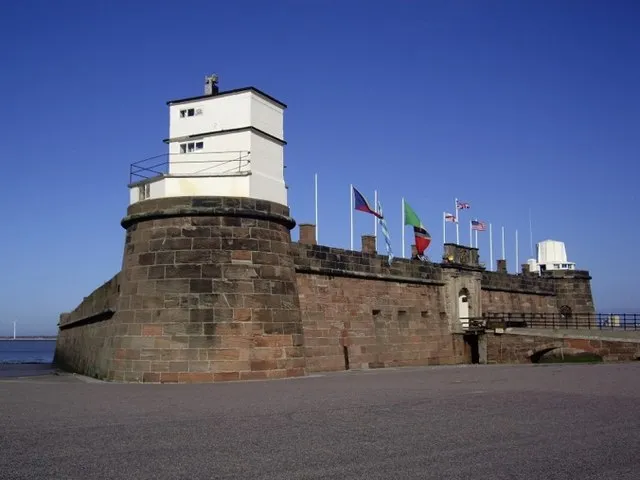
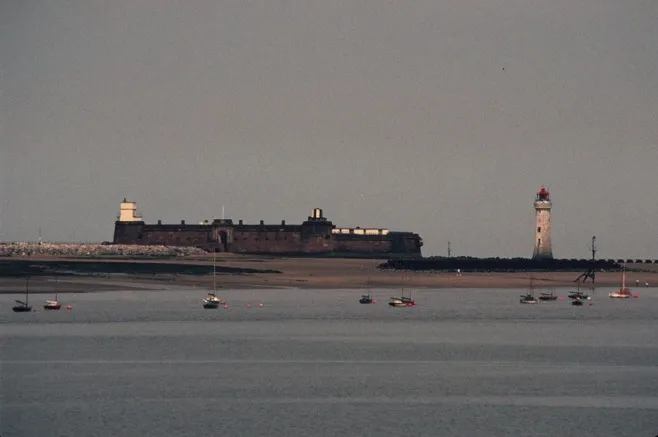
Stand at the bottom of the ramp on Marine Promenade and the fort gives you its headline: a low, wide, red-brown mass sitting out on its rock like something that has decided not to move. It is a good first impression, but it isn't the whole story. The whole story is smaller, and it's scattered about the place in bits of stone and metal most people walk straight past.
So this is a tour with a difference. No founding dates in bold, no dramatic sieges. Five objects instead — five humble bits of fabric that each open a different chapter of the fort's life. Bring this list with you and look for them properly. It takes about half an hour and it will change how you read the building.
Why small things beat big dates
A fort is a machine for housing people. That's the thing to hold on to. Behind the grand purpose — defending the Mersey, guarding the approach to Liverpool — it is a place where men slept, ate, cleaned guns, queued for something, got bored and wrote their names on walls. All of that leaves traces. Dates tell you what was decided in London; wear marks tell you what actually happened here.
And unlike the interpretation panels, the fabric doesn't tidy itself up. It just sits there, honest and slightly scruffy, waiting for someone to notice.
One: the sandstone block that doesn't match its neighbours
The fort is built of red sandstone, laid in the 1820s when the whole structure was planted out here on the rock. Run your eye along the lower courses on the landward face, near where the ramp meets the walls, and you'll spot blocks that sit slightly differently from the rest — a different tone, a different texture, a joint that has opened a fraction wider than its neighbours.
Look for: the tooling. Dressed faces are smooth and regular; the rougher, pitted surfaces show where the bedding planes of the stone have been eaten away by salt and wind. Two hundred years of Mersey air does that. Look for the mortar too, repointed in places, weathered back to sand in others. Every repair is a small decision someone made, decades apart, about whether the fort was worth keeping.
Two: a bolt with nothing left to hold
On the upper levels, set into the stone, you'll find iron fixings — square-headed bolts, rings, brackets and streaks of rust that run down the wall like handwriting. Some of them once held railings, some held machinery, some almost certainly held guns.
Look for: the rust stains. Each one is a little clock. The bolt itself might be Victorian or a 20th-century replacement, but the bloom beneath it tells you how long water has been getting in. Look at how the iron was bedded — lead or sulphur in the hole to stop it splitting the stone — and think about the sheer fiddly labour of doing that on a windswept rock in the 1820s.
This is the fort as a working gun platform rather than a pretty landmark. Its armament changed as fashion and technology changed; the bolts stayed.
Three: the step worn into a dip
Find a doorway — the barrack rooms, the passages, anywhere a threshold has been crossed a few thousand times — and look at the stone underfoot. Very often the middle is scooped out, a shallow bowl a couple of centimetres deep, polished smooth.
That dip is the garrison. Boots, day after day, year after year, through drill and dinner and kit inspection and the long dull hours of a posting that was mostly waiting. The fort was manned, on and off, for well over a century, and its soldiers were finally stood down in the 1950s. Every one of them walked that line.
Look for: the shine on the high points either side of the dip, where the traffic was thinner. It's the least glamorous exhibit on site and the most persuasive.
Four: a name scratched where nobody was meant to look
Somewhere in the fort's less formal corners — a passage wall, the back of a recess, the inside of a doorway — you'll find faint scratched marks. Initials. A surname. Sometimes a date. Often a few lines of pencil so faded it's barely there.
Wartime graffiti is the most human thing in the building. A soldier carving his initials is doing exactly what visitors do today: leaving a small claim on a big place. Do look closely. Don't touch, don't rub, and please don't add your own — the point of these marks is that they are old, and the moment we all scratch our names the record is spoiled.
Look for: letters cut with a knife or a nail, usually at about shoulder height, where a bored person would stand. If you find one, photograph it flat-on and take a note of where it was. Local researchers genuinely do trace names back through records, and a clean photograph is worth a great deal.
Five: the modern safety sign
The newest object on this list is the one most people ignore completely: a plain, laminated or painted sign telling you not to climb, not to cross, mind the step, watch the tide.
It's tempting to see these as clutter. Look again. Signs are the fort's third career made visible — after garrison and after abandonment, this is a place that now has visitors to protect and a fabric to conserve. Somebody has to think about insurance, about liability, about whether that handrail is sound. The sign is proof that people care enough to argue about it.
Look for: how many different generations of signage you can spot. Old painted lettering, a faded board, a bright modern notice. Each one is a decade's worth of somebody's judgement about risk.
Your five-object walk
So: a block, a bolt, a step, a scrap of chalk, a sign. None of them will make a postcard. All of them together explain why this lump of sandstone on a rock still matters.
Walk the ramp slowly on your way out. You'll see them now.