Steam, Sand and Stucco: Following New Brighton's Lost Railway Crowds
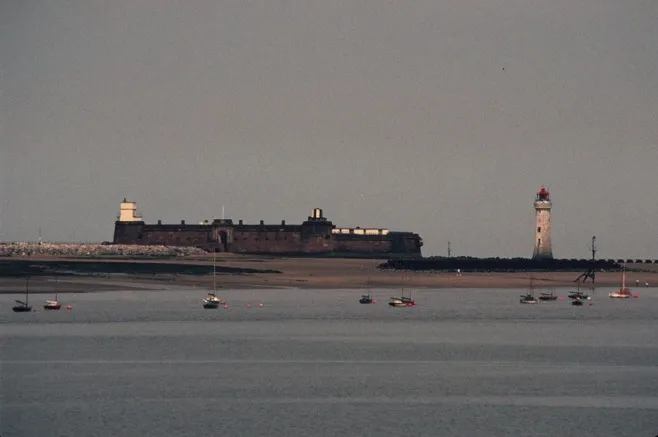
Photo: Jerrye & Roy Klotz, MD, CC BY-SA 3.0, via Wikimedia Commons
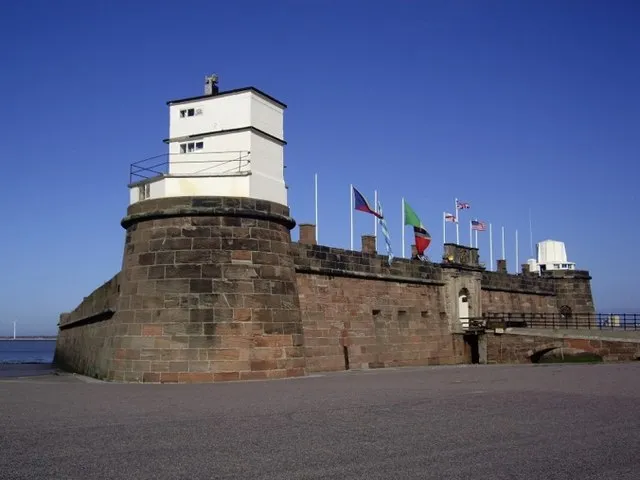
Stand on the ramparts of Fort Perch Rock on a grey November morning in 2026 and the Mersey does most of the talking. The wind carries the smell of salt and diesel, the ferry slides past on its way to Liverpool, and the fort sits where it has always sat: low, solid and slightly surprised to be a visitor attraction. But look landward and there is another story. The streets behind the promenade were laid out for crowds who arrived by train and ferry, not by car. New Brighton was built as a resort with a transport machine attached, and the fort was one of the things people came to see.
The Fort That Waited for a Train
Fort Perch Rock was completed in the 1820s to guard the approaches to the Mersey. By the time the Victorians turned New Brighton into a proper seaside destination, the fort had already been standing for half a century. It was a defensive building first, but it became a backdrop: something to walk past, photograph and point at from the pier. That shift mattered. The fort's life as a visitor destination was not really created by its own walls. It was created by the railway, the landing stage and the habit of taking a day off.
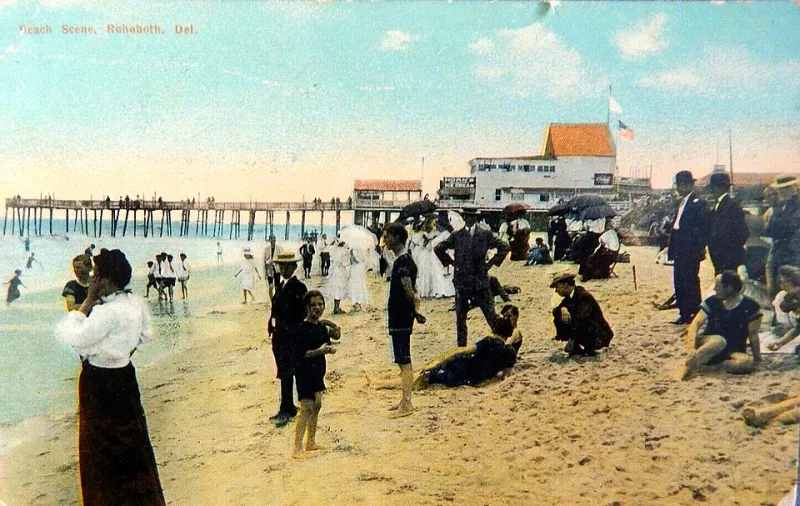
The railway reached New Brighton in 1886, when the Wirral Railway extended its line to the town. The terminus still does what it was built to do, though the trains are electric now and the journey from Liverpool is a matter of minutes rather than an outing in itself. In the late Victorian and Edwardian years, though, the arrival was the event. Excursion trains emptied onto the station approach, charabancs waited, and the promenade filled with people in hats. The pier landing stage took another stream of passengers off the ferries. Both streams met on the waterfront, and Fort Perch Rock sat at the edge of that holiday geography.
There was also a second station, now gone. New Brighton Tower station opened at the end of the 1890s to serve the New Brighton Tower, the steel giant that briefly dominated the skyline. The tower was dismantled after the First World War, and its station closed before that. The exact site is not obvious today, which is part of the fun. You have to read the streets rather than look for a platform.
Reading the Ghost on the Map
Old Ordnance Survey maps are the best ghost-hunters. Spread one out and New Brighton looks different: the pier and landing stage push out into the river, the fort is a tighter, more isolated feature, and the railway lines and sidings sit closer to the town's holiday heart. The maps show a place organised around arrival. The station is not a suburban afterthought; it is the front door.
They also show how much the shoreline has changed. The promenade and sea wall have pinned the fort to the land in a way that would have looked strange to a Victorian engineer. The pier itself was opened in 1867 and was gone by the late 1970s, after a long decline and a fire. The landing stage has vanished. What remains is the shape of the approach: the wide streets, the seaward gaps, the way the town still turns its face towards the river.
When people ask what is left of New Brighton's railway boom, the honest answer is: more than you think, but not in the form of a ghost train. The line is still there. The station is still there. The crowds are still there on a sunny weekend, though they arrive by Merseyrail and by car. The lost part is the pier traffic and the Tower station, and the particular rhythm of a resort that expected thousands of people to pour off trains and boats at the same time.
A Walk from the Ramparts to the Station
Start at Fort Perch Rock and walk inland along Marine Promenade, keeping the river on your left. This is the easiest part of the story to feel. The fort, the lighthouse and the wide water sit together exactly as the old postcards promised. Then turn into the town where the promenade meets the streets behind it and follow the rising ground towards New Brighton station. It is a short walk, perhaps twenty minutes without stops, but it flips the perspective. From the fort you are looking out at the river. From the station approach you are looking back at the resort.
At the station, look at the scale of the approach and the retaining walls. This is not a country halt. It was built for volume. The station building and canopy have been altered over the years, but the line still curves in with a sense of purpose. From here, follow the streets back towards the waterfront and look for the names that remember the old attractions: Tower Promenade, Tower Road and the general grid of streets laid out for visitors. The Tower station itself is a puzzle for map-lovers rather than a monument. There is no platform to find, only the memory of one in the street pattern.
Finish back at the fort, ideally with a flask. The walk is not long, but it covers a century of change. The fort was built to keep people out. The railway was built to bring them in. The two facts sit together on the same short stretch of coast, and neither cancels the other.
What Survives, What Doesn't
The surviving railway is the easy part. New Brighton station is still a working terminus, and the line from Birkenhead is still the artery that makes the town easy to reach without a car. The vanished part is the pier approach: the landing stage, the excursion traffic, the Tower station and the sheer volume of Victorians and Edwardians who treated New Brighton as Liverpool's playground. Old maps and photographs are the best way to see that lost layer. They show the pier reaching into the river and the fort sitting at the edge of a resort that was still being invented.
For a day-tripper in 2026, the practical lesson is simple. The fort is not just a standalone monument. It is part of a transport story. Walk the promenade, look at the station, and read the old map in your head. The railway ghosts are not spooky. They are the reason the fort has visitors at all.