The Card in the Window: Fort Perch Rock and a Century of Seaside Souvenirs
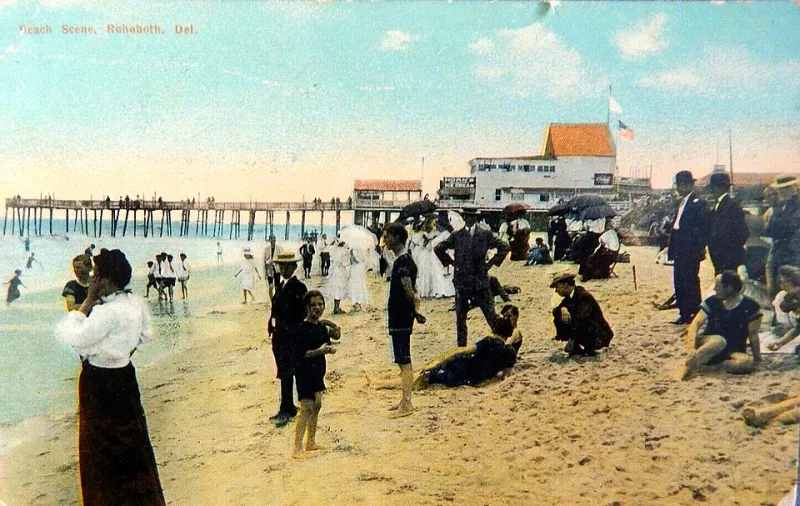
Photo: Ann Longmore-Etheridge from Western Maryland, United States, Public domain, via Wikimedia Commons
There is a particular kind of seaside shop where the postcard rack still turns slowly in the draught. Beside the rubber rings and the rock, you will usually find a few local views: lighthouse, promenade, maybe the fort. They are cheap, disposable and easy to overlook. Yet those little rectangles have been doing a serious job for more than a century. They have told visitors what New Brighton was supposed to look like, what was worth remembering, and which bits of the coast deserved a stamp.
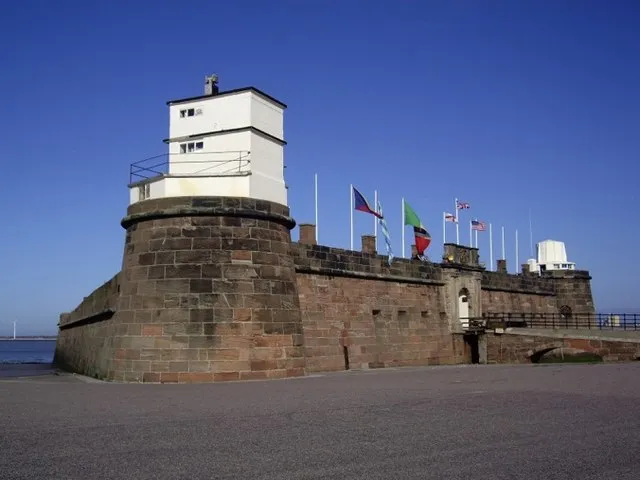
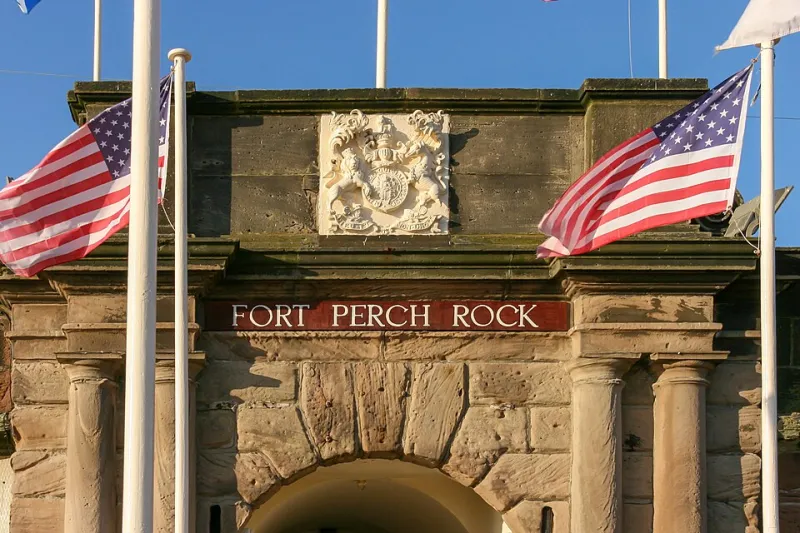
Fort Perch Rock has been caught up in that trade almost since the beginning. The fort was not built to be charming. It was built to be useful, and ideally not to be visited at all. Postcards helped to change that. They turned a low, dark defence work on a rock into part of the holiday picture — sometimes the star, more often a handsome bit of scenery behind the deckchairs.
A small picture with a big job
A postcard is never a neutral record. Someone chose the viewpoint, the weather, the caption and the colour. In the late Victorian and Edwardian years, when the craze for seaside postcards was at its height, New Brighton was already a busy resort. The ferry and the railway brought day-trippers from Liverpool and beyond. The tower, the pier, the promenade and the baths all competed for space on the card. The fort had to fit in somewhere.
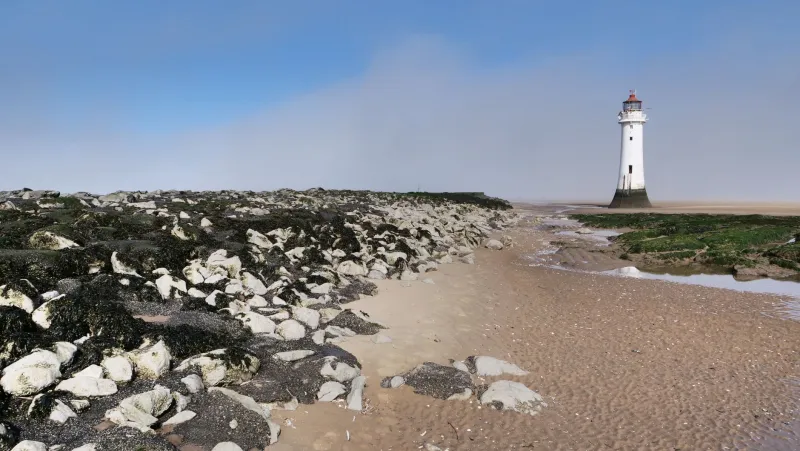
On many early views it sits firmly in the background: a squat, grey presence beneath the lighthouse, with the river stretching out behind. The caption might be simply 'Fort Perch Rock, New Brighton'. The image is often formal, even a little severe. Photographers liked clear lines and respectable stances. Families stand stiffly on the prom; the fort looks as though it would rather be left alone. That is part of the appeal now. You can see the resort and the defence work eyeing each other across the same strip of sand.
The fortress as backdrop to the holiday
The fort's military life gave early postcards a useful tension. Here was a place built to keep people out, pictured for people on holiday. The card did not need to explain that contradiction. It simply sold the view. The lighthouse, the fort and the wide Mersey made a neat composition: vertical, horizontal, then water. Add a steamer or a sailing boat and the scene had movement.
Look closely at those old cards and you can often spot the things that have since gone. A different rail on the prom. A pier building. A bathing machine or a row of benches. The fort itself is the steady element. Its shape is recognisable across the decades: the rounded bastion, the low walls, the flagstaff, the lighthouse close by. That continuity is why postcards make such good comparison tools. The coast has been rearranged around the fort, but the fort has largely stayed put.
When the Rock learned to smile
By the mid-twentieth century, the postcard had changed its tone. Colour printing made the sea a more confident blue and the prom a brighter white. Cards showed coaches, crowds, illuminations and children with buckets and spades. New Brighton was being sold as a place of fun, not just a respectable promenade. The fort, now less of a military secret and more of a local landmark, could be folded into that cheerful version of the coast.
Some mid-century cards almost treat the fort as furniture: a bit of history in the corner of a sunny scene. Others give it a full portrait, usually with the lighthouse and a lively sea. The captions become breezier. The colours are not always trustworthy. Clouds get painted out. Grass turns a vivid green. A dull day becomes a brochure day. That is not a fault so much as a clue. Postcards were advertising as well as souvenirs, and the resort wanted to look its best.
Reading the gaps
The most interesting cards are often the ones that leave things out. You will rarely see a wet Tuesday, a closed café or a pile of litter. Nor will you see much of the fort's less photogenic working life. The picture is edited. That does not make it useless. It makes it a record of aspiration. New Brighton was telling visitors, and itself, what kind of place it wanted to be.
When you compare an old card with the real view today, the gaps become part of the day out. Stand on the prom near the fort and line up the lighthouse, the river and the low sandstone walls. Some angles still match surprisingly well. Others have been rewritten by new buildings, new sea defences and the simple passage of time. The fort's public role has shifted too. It has been a museum, a venue and a much-photographed local landmark. In 2026 it is less a forbidden battery than a place people come to look at, walk past and photograph for themselves.
Taking the card to the coast
You do not need a collection to try this. A single old postcard, a phone snapshot of one, or even a memory of a card in a window will do. Take it to New Brighton and find the spot where the photographer stood. Check the lighthouse against the fort. Look at the curve of the prom. Notice which railings have moved and which sightlines have survived. Then take your own picture, not as a copy but as the latest card in a very long series.
The seaside postcard was never just a pretty view. It was a message sent home: I am here, the weather is doing this, the sea looks like that. Fort Perch Rock has been part of that message for generations. The ink fades, the captions date, and the colours lie a little. But the view still holds. Stand on the prom, look out at the rock, and you are seeing what a century of holidaymakers were invited to remember.