The Pole, the Rock and the Shipping Lane: How Perch Rock Got Its Name
Perch Rock is one of those names that feels obvious until you try to explain it. There is a rock. It sits in the Mersey. The fort is planted on it. But the ‘perch’? That is where the certainty runs out and the interesting part begins.
Because ‘perch’ is not a word most of us use about the sea. We perch on a wall. A bird perches on a branch. A perch is a freshwater fish. None of those immediately explains why a stubborn lump of rock off the Wirral coast should carry the name into charts, guidebooks and the side of a fort.
A name that does a job
Place names around harbours and estuaries tend to be practical before they are pretty. They tell you where the channel runs, where the mud begins, where the water is deep enough for a keel. A name like ‘Perch Rock’ is not a romantic label added after the fact. It reads like a note passed from one sailor to another: there is a rock here, and there is a perch on it.
That is the strongest clue. Before ‘perch’ meant a place to sit, it meant something more useful on the water.
What a perch was before it was a fish
In old navigational usage, a perch was a marker. Think of a pole, a mast or a beacon set on a shoal or a rock to make a hazard visible. It might carry a flag, a basket, a shape or simply a coat of paint. It was cheap, low-tech and effective — a way of saying ‘not here’ to a ship’s master in poor light or a running tide.
The Mersey has always needed that kind of conversation. The estuary is wide, shallow in places, and busy. Sand shifts. Channels move. A rock that is obvious at low water can vanish under a spring tide and become a trap. Putting a perch on a rock is exactly what a harbour authority would do: mark the danger, keep the channel clear, and give pilots something to line up.
If that is the origin, then Perch Rock is not named after a bird or a fish. It is named after a piece of maritime furniture — a warning pole on a dangerous rock. The fort, built in the 1820s, inherited the name rather than inventing it. That fits the way coastal names work. The hazard gets named first. The building arrives later and borrows the label.
The paper trail is thin, but it points one way
Here is the honest bit. There is no single document that says ‘we called it Perch Rock because of the perch’. The name appears in early nineteenth-century usage around the fort, and the fort itself was known as Perch Rock Battery. Charts and harbour records use ‘perch’ for markers in precisely this way. But the paper trail does not stretch back to a founding ceremony with a plaque and a speech.
That absence is normal. Working names are rarely explained while they are working. Nobody writes a memo about the obvious. The name survives because it was useful, then because it was familiar, and finally because it was on the fort.
What we can say is that the navigational explanation fits the geography better than any of the alternatives. The rock is a genuine hazard. The water around it is tidal and busy. A perch on that rock would have been a sensible, inexpensive response. The name reads like a description of that response.
The stories that grew legs
Folklore has had fun with it. One version says the rock was named after perch caught nearby — a nice idea, though perch are primarily freshwater fish, which makes a saltwater estuary an odd home for a shoal of them. Another says the rock was where seabirds perched. That is plausible as a scene, but less convincing as a naming convention when the same word was already doing technical work on the water.
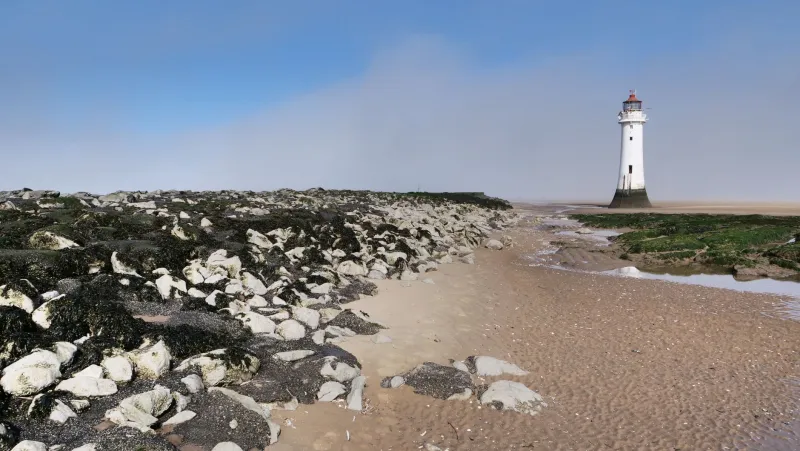
There is also the tempting image of the rock itself ‘perching’ above the tide, as if it were a bird on a branch. It is a lovely way to picture the place at low water, when the rock shows its shoulders and the sand stretches out. But lovely is not the same as documented. The safest reading is that the navigation term came first, and the poetry came later.
That is not a disappointment. It is a reminder that the shoreline is full of language that was once purely functional. ‘Perch’ is a small word with a job to do.
Reading the shoreline beneath your feet
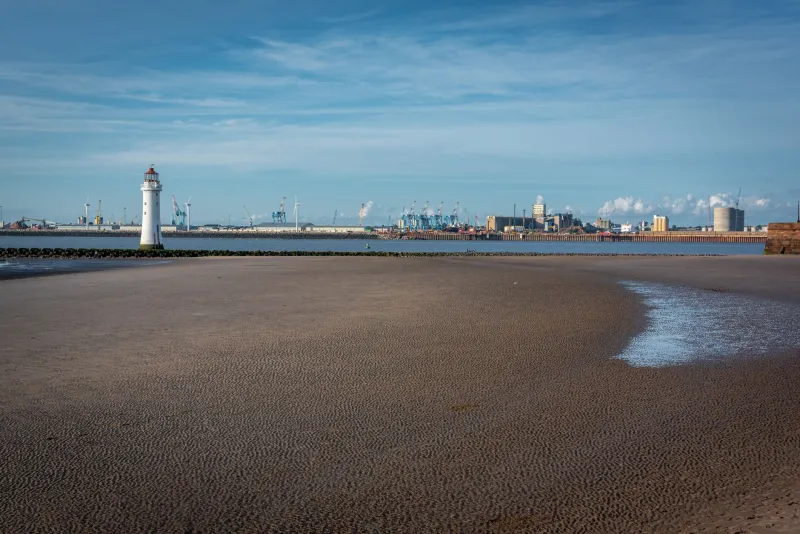
Next time you are on the promenade at New Brighton, try saying the name as an instruction rather than a label. Perch. Rock. There it is: a rock that needs marking, a channel that needs protecting, a fort that was later dropped on top.
The fort and the lighthouse nearby both work as landmarks, but the name does something subtler. It points to the water itself. At low tide you can see the rock, the sand and the line of the shore. At high tide the rock disappears and the name becomes a warning again. That is the rhythm the name was built for.
If you are walking out on the beach, check the tide times before you go. The Mersey does not do gradual hints. And keep to the sand and the promenade rather than striking out across mud or unmarked ground. The name is a piece of safety advice that has survived for centuries.
A working name, not a pretty one
So why ‘Perch Rock’? The likeliest answer is the least romantic: because a perch was a marker, the rock was a danger, and the two belonged together in the language of the river. The fort made the name famous, but it did not make the name. The water did.
That is a good way to read the Wirral coast — not just as a view, but as a working landscape with a memory. The rock is still there. The perch is long gone. The name is the echo.